Rebrand or Refresh?

James Cullen, Creative Lead
A practical guide for manufacturing brands who know something needs to change but aren’t sure where to start...
A shorter version of this piece first appeared in our recent publication, Ripple Brand News. If you’d like a copy, drop us a message and we’ll pop one in the post.
If you work in marketing for construction manufacturing, and you haven't done any real scrutiny of your brand architecture or positioning in the last few years, chances are your business has outgrown your brand.
Sales may be evolving. Products are improving. Ranges are diversifying. Sustainability expectations are definitely rising. Yet the brand still looks, sounds and behaves like it did five or ten years ago.
That’s usually the moment the internal debate starts:
Do we need a rebrand… or just a refresh?
It’s an important distinction, commercially, culturally and politically. Get it right and you build momentum. Get it wrong and you risk cost, confusion and credibility.
This guide is designed to help you make a decision about what level of change or investment is needed – then make a clear case to your manager, leadership team or board.
First, the reality check: branding is not a nice to have. It’s a commercial tool and competitive advantage.
In manufacturing for construction, branding is no longer a “nice to have”.
Margins are tight (often 2–6%).
Procurement scrutiny is increasing.
ESG expectations are becoming standard, not exceptional.
And differentiation on product alone is getting harder.
In that environment, brand clarity does three very practical things:
· It reduces price pressure
· It builds trust faster in high-risk decisions
· It makes your business easier to choose, recommend and work with
That’s why more manufacturers are revisiting their brands: not to look trendy but to stay competitive.
Rebrand vs Refresh: the difference that matters
A rebrand is a strategic reset
Whether the market has changed or you’ve changed, how you’re perceived in it is imperative. Why? Because perception drives how others respond to you, directly influencing their buying decisions, professional relationships and opportunities to build trust.
A rebrand is a reset: dialling up your strengths is a way that is authentic and has integrity
This usually involves:
· New positioning or market focus
· A clearer Unique Value Proposition (UVP)
· A new tone of voice
· A redesigned visual identity
Rebrands are right when:
· You’ve entered new markets or sectors
· Your old brand no longer reflects scale, capability or ambition
· Competitors are overtaking you in perception
· Your story doesn’t match the business you’re actually running
A refresh is about sharpening what already works
It’s refinement, not reinvention.
This might include:
· Updating visuals without changing the core identity
· Clarifying messaging and hierarchy
· Improving consistency across touchpoints
· Bringing sustainability, innovation or people into clearer focus
Refreshes work best when:
· The fundamentals are strong
· The brand feels dated, not wrong
· Your team struggles to explain what’s changed
· Your competitors are starting to sound like you
In our experience, most manufacturing brands can benefit from a refresh before they need a rebrand.
The biggest risk: doing nothing
When branding is left untouched for too long, a few predictable things happen:
· Messaging becomes generic (“quality”, “reliable”, “trusted”)
· The market defaults to price
· Sales teams improvise
· ESG work goes unseen (when it could be your superpower)
· Recruitment becomes harder
· The brand loses control of its own narrative
This is what we call the commodity trap, and it’s far harder to escape once you’re deep in it.
How to build the internal case
If you’re putting a proposal in front of leadership, these are the arguments that land best:
1. Start with risk, not aesthetics
Poor branding increases commercial risk:
· Harder procurement conversations
· Lower perceived stability
· Reduced trust in long-term partnerships
Good branding reduces friction and speeds decisions.
2. Show where inconsistency is costing you
Audit real-world touchpoints:
· Website vs brochures
· Vans vs signage
· Sales decks vs tenders
· ESG reports vs marketing
Inconsistency quietly erodes credibility and that is turn is fatal for trust.
3. Tie brand to growth, not taste
The strongest argument isn’t “we need to look better”.
It’s:
· We need to defend margin
· We need to attract talent
· We need to win trust faster
· We need to futureproof
Real-world examples (without the hard sell)
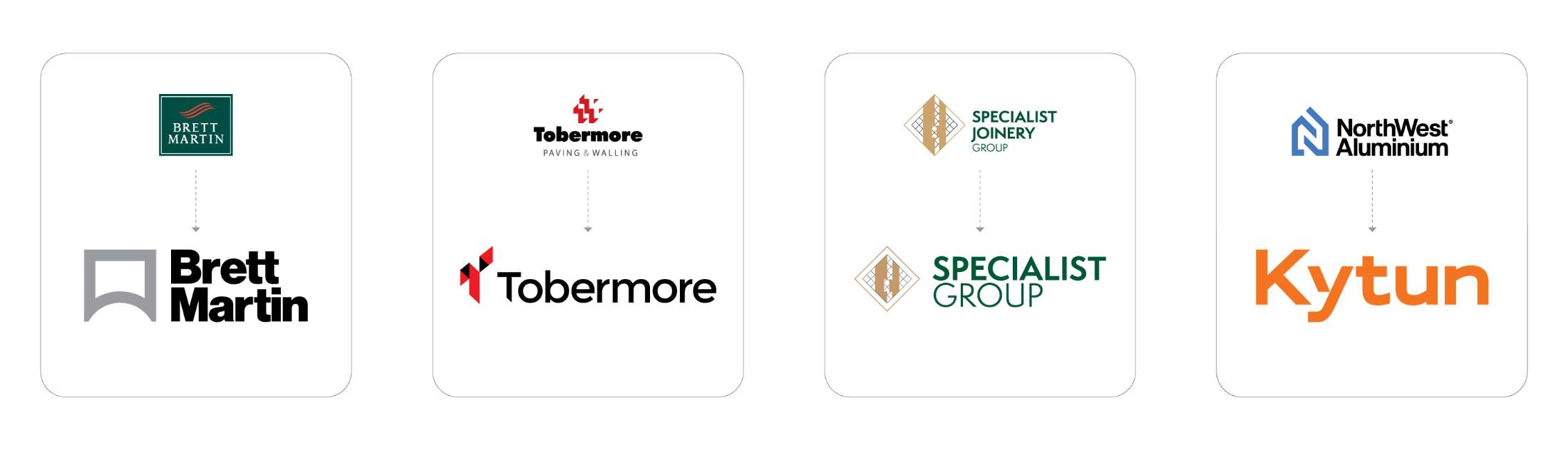
Across our work with brands like Kytun, Camden, Tobermore, and Brett Martin, the pattern is consistent:
· Product innovation already existed
· Capability had outgrown perception
· The opportunity was visibility, clarity and confidence
In each case, brand work didn’t replace substance. It revealed it.
Sometimes that meant a bold repositioning.
Sometimes it meant refining what was already there.
Every time it meant aligning story, visuals and strategy so the business could move forward without friction.
A word on ESG and brand
Sustainability is now a procurement requirement, not a press release.
But too many manufacturers bury strong ESG work in dense PDFs or disconnected messaging.
Branding helps by:
· Turning data into direction
· Making progress visible and credible
· Connecting ESG to real business impact
A refresh is often all that’s needed to bring this work into focus.
Read our recent blog on: What could an on brand ESG Brochure can do for you?
Where Ripple fits in
We don’t arrive with a fixed answer.
Our role is to:
· Help you diagnose what level of change is needed
· Shape the internal argument
· Reduce risk
· Build momentum
· And make sure whatever you do actually works in the real world
Sometimes that’s a rebrand.
Often, it’s a refresh done properly.
Either way, the goal is the same: clarity, confidence and commercial impact.
To sum up...
Your brand already exists.
The question is whether it’s helping you move forward or holding you back?
If you’re weighing up rebrand vs refresh and want a straight conversation, we’re always happy to help you think it through.
Get in touch to get your brand up to speed...